
Author Archive
Five Simple Tips to Drive Highway to Permitting Success

I’ve met a few people this year that have struggled in one way or another in obtaining the necessary permits on highway construction projects. From forgetting to fully assess site conditions for Rock Quarry to having modular trailers that lacked State seal of approval to getting started later than planned with environmental permits, issues popped-up that stressed the start of construction.
So, what were my wise words of wisdom shared during recent conversations? Did I talk about the intricacies of environmental permits or best practices of Right of Way?
Instead, what I mentioned and have found valuable are five simple tips that help to remove blind spots and provide clarity in obtaining agency and jurisdiction permits.
- Start Early – Regardless of the type of permit being sought on your highway or DOT related project, getting started early during the planning and early design phases allows you to ask questions or be available to answer team member’s questions about permit requirements and concern areas. Waiting for the ball to enter your realm to begin thinking about permits almost always causes a delay.
- Use Agency and Jurisdiction Checklists and Cheat-Sheets – Making assumptions about what needs to be completed to obtain a specific permit is one sure-fire way to cause a delay in construction. Assumptions can be eliminated by using available agency checklists and cheat-sheets that are found online. The latest version of documents is available on agencies web site to help ensure that construction permit requirements are met.
- Perform QA/QC – It takes a lot of time and effort to complete permit applications, assemble package and submit to the agency. Before submitting permit applications and package, have a team member to QA/QC to make sure all forms are properly and fully completed including all signatures and stamps on plans are discernable. This one step alone can save a significant amount of time and money.

If a team member is not available to assist, then consider having a third-party permitting expert as a resource to QA/QC before submitting.
- Track Changes – Keep an ear open and make sure to read internal communications to see if any design or specification changes may derail efforts to prepare for permitting. It is wise to also touch base with jurisdictions as well to make sure forms using are correct, assess agency internal workload or for process changes to make sure can move forward with permitting with little or no hiccups.
- Ask Questions – If you have doubts in any area of regarding permitting process or your gut gives you a signal or you have not kept up with jurisdiction or agency permitting process and latest standards or your team lacks the depth to properly handle, then your best action to take is to write down your area of concerns and have gaps in addressing requirements then ask questions. Jurisdictions and agencies are partners in the process for safety and are available to answer your questions.
Conclusion
There are billions of dollars of highway projects in Texas and other parts of the United States that will require permitting and taking simple steps early in the process goes a long way in obtaining permits in a timely manner. If you have any best practices in obtaining permits on highway or other DOT related projects, please let me know @PermitUsNow on Facebook or Twitter.
Build Safe.
Five Ways to Get Your Permit Faster
Five Ways to Get Your Permit Faster
Looking to get started with your construction project on time? The building permitting tips and insights below from Helen Callier, Permit Us Now, Contributing Writer will assist you in positioning for success.
| Know the Jurisdiction | Stay Notified | Avoid Horror Story | Start Early | Use Smart Resources |
| Time is Key | Bank on Changes | Suspense Hurts | Procrastination Costs | Eliminate Headaches |
| With hypergrowth in some areas of the U.S. over the last few years like in Portland, North Texas, Austin Hill Country and Los Angeles, it can be confusing to know which jurisdiction your project is located. | You do not have to do all the heavy lifting yourself. Sign up for the appropriate jurisdiction’s email notifications, follow jurisdiction on social media like Twitter and set up Google alerts for keywords. | Helpful information is available on jurisdiction web sites from Permitting Checklists and FAQ’s to changes in building codes and explanations about codes to persons you can contact if have more questions. | Regardless if your project is large or small, getting started early in planning for your building permit can save time and money. Depending on the type of project, your own pre-construction checklist should have a building permitting line item. | Permit Expediters are a proven resource and are experts in building codes. They have established relationships with jurisdictions, stay up-to-date on jurisdiction changes and have… |
| Know the Jurisdiction | Stay Notified | Avoid Horror Story | Start Early | Use Smart Resources |
| Time is Key | Bank on Changes | Suspense Hurts | Procrastination Costs | Eliminate Headaches |
| If your project is near the border of another jurisdiction it is wise to verify before you proceed down the path to submit for a building permit. Time is money and a simple phone call or checking the jurisdictions’ web sites can save your most precious asset – time. | Doing this allows you to be informed about changes in hours of operations, know if a certain department is out for training or impacted by major staff changes and be alerted on ordinance changes that may truly impact your project. | Key information to look for are the prerequisites to accompany permit application and plan set along with how to upload into the electronic system. These two alone, if missed, can stop your attempt to submit for a building permit and cause rejections. | Make sure to at least check jurisdiction web sites for any changes, and if available to you, review plans to see if there are areas of concern. Catching permitting-related issues early before submitting to jurisdiction saves you money and positions you to start construction in a timely manner. | … a reservoir of different kinds of projects – commercial, residential, industrial – that they have worked on to be able to share insights and answer any unique questions. |
In Conclusion
When popping in and out of jurisdictions across the state of Texas and other areas in the U.S., Permit Us Now team members often hear contractors complaining about the building permitting process. The five ways mentioned above are geared to rid you of frustrations and help you pull a building permit faster. Build Safe.
How to Obtain City Building Permits to Rebuild After Hurricane Harvey

From Rockport to Houston to the Beaumont, Port Arthur Triangle, thousands of residential, commercial and government buildings have been affected by Hurricane Harvey and require rebuilding. As a native of Houston, I, along with the Permit Us Now team, want to help our communities get back into operations faster, so we want to share with contractors, architects and project owners what we know to-date on obtaining city building permits.
Here’s the Latest News on Area Permitting Centers
City of Houston Permit Center
*The emphasis is on helping Houstonians get back on their feet and get their homes and businesses repaired and usable.
The City of Houston and other permitting jurisdictions have made adjustments to internal processes to assist project owners, contractors, and architects in obtaining building permits as quickly as possible.
Walk-ins are allowed in the Floodplain Management Office (FMO); just pull a flood damage ticket on the first floor. The FMO may need to do an inspection before issuing a permit depending on where the property is located, the nature of the work and the completeness and reasonableness of the cost estimate. Please review with FMO if have any questions and you can check their website to see if the property is located in a floodplain.FEMA has set up Disaster Recovery Centers and Houston Permitting Center staff are handing out basic permitting information at designated tables. Note: Cosmetic work involving painting, flooring, etc. does not require permits.
HPC has extended business hours to close at 7pm instead of 5pm and will add Saturdays if needed. Please check the City of Houston Permitting Center website for more information.
HPC’s intention is to focus first on ‘Repairing Houston,’ with resources available at One-Stop to meet demand. Also, the HPC is expecting the go-ahead soon to roll out mobile and regional based One-Stop centers in the hardest-hit areas.
We are estimating a possible four-week delay in obtaining building permits and for the workload to return to a reasonable level. Please monitor our Facebook page @PermitUsNow and the City of Houston’s website for updates.
To learn more about flood damage repair in the floodplain, visit Public Works website
HARRIS COUNTY
Harris County and other neighboring counties impacted by the storm have waived permit fees.
Commercial and residential properties must have a permit. If you have an account, when you sign in, go to the drop-down menu and click the Commercial Flood option. Next select submit on this application.
Residential is the same process. For either commercial or residential, a site plan and a floor plan are required. Show the areas that were flooded and need repair. For both residential and commercial, the county must inspect before a permit is issued.
Call 713-274-3880 to self-report if you are a project owner in Harris County jurisdiction.
PEARLAND
Commercial and Residential need to apply for a no-fee due permit. Project scope of work is required and must be non-structural. If there is structural damage or changes, you will need to submit plans.
FRIENDSWOOD
Must apply for a demo permit and a separate repair permit. All applicable (Mechanical, Electrical and Plumbing) must apply for a permit. If any structural damage or changes, you will need to submit a full set of plans.
PASADENA
All commercial work will continue with permits and inspections will occur. Cosmetic work involving painting, flooring, etc. does not require permits.
Residential storm damage will require permits and inspections for significant structural repair and replacements. Plans are required as well.
For sheetrock remove and replace, no-fee permits will be issued so the project can be tracked.
No-Fee permits will be issued for travel trailers and RVs on homeowners’ property for 120 days.
ROCKPORT
In operation and working from a different location since municipal building was destroyed. We are in communications with the permitting staff and will post updates @PermitUsNow on Facebook and Twitter.
CORPUS CHRISTI and PORTLAND
Jurisdictions are open and managing permitting process as quickly as possible. If you have any questions, please refer to their respective websites. We will continue to monitor workloads as we have commercial projects in coastal areas.
Other Points to Note
Over the last few months, we have noticed an increase in requests from commercial project owners who needed building permits after the construction work was completed. Most building projects require a building permit to start construction and a permit is required as proof for a city inspection, as well as to obtain a certificate of occupancy.
There will be a large amount of construction work for a long period of time. Below are six tips to consider while managing an increased commercial project workload
In Conclusion
We are grateful and give credit to the hundreds of plan reviewers, inspectors, city engineers and Permitting Center managers working at the City of Houston and surrounding areas from Rockport to Corpus Christi, Texas who were helpful in providing information on obtaining permits after Hurricane Harvey. We also appreciate the opportunity to work across the State of Texas assisting organizations that require building permits.
If you have any building permit tips to assist in rebuilding after Hurricane Harvey flooding, please connect with me on Linkedin and @PermitUsNow on Facebook. Build safe.
Five Reasons Why Obtaining Building Permits Can Give Contractors The Blues
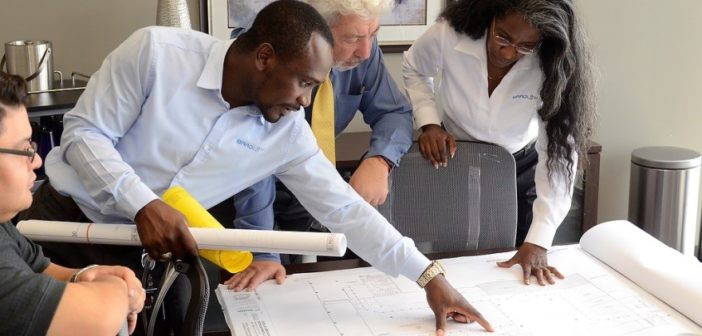
Plan reviews are important prior to submitting for a permit.
Talk with most contractors about building permits and the topic will soon shift to a nightmare story or two about the problems experienced in obtaining city building permits. You will hear about how they had to make several trips to speak with different plan reviewers and waited weeks for a final plan review. And, while most municipal permitting centers have good intentions, the truth is, the building permit process is confusing to thousands of contractors across the country. These things can cause delays in obtaining building permits and starting construction in a timely manner.
Here are five reasons why contractors are frustrated with the building permitting processes
To eliminate the stress and delays in obtaining a building permit, below are three helpful tips to assist contractors in obtaining city building permits fast.
Tip #1 – Prepare: Make sure the architect or engineer has sealed all design documents and complied with appropriate jurisdiction’s building codes. Also, create files of all the required documents to be able to quickly respond to any request for information.
Tip #2 – Plan: Review and outline your project’s pre-construction schedule, and note the key milestone date when the building permit is required to start the project in a timely manner.
Tip #3 – Ask: Contact the building permit experts at your designated jurisdiction’s permitting department, and ask them questions on steps to follow. In many jurisdictions, you can schedule an appointment with the plan reviewer to address concerns about certain aspects of design meeting building codes. Do note that some city permitting departments have budget challenges and charge a fee when meeting with a plan reviewer. Make sure to ask if this is the case to avoid any unexpected fees.
In addition, you can contact a permit expediter for an expert opinion. Permit expediters know the building permit processes, have established relationships with plan reviewers, inspectors, and other key staff, and are solid resources to consult before you begin your trek of obtaining a city building permit. Using a permit expediter can save you time and money by completing required building permit applications and making sure all prerequisite documents are in place for submitting with plans.
In Conclusion:
If you are a contractor, you may be wrangling with the decision to take the DIY building permit approach, which can eat up your precious time and pull your focus away from construction. However, you can avoid the frustrations and cost delays by hiring a building permitting and code expert.
The Permit Us Now team is here to answer your questions on building permits and codes. You can reach us online anytime at www.permitusnow.com or call 1-844-PERMIT-4. Safe building!
From Site Selection to Tenant Build-Out: 5 Key Points to Obtain a Building Permit Fast

Construction workers and architects at a construction site viewed from above.
Texas continues to show a good demand in construction across markets in Dallas, Fort Worth; and farmland between Austin and San Antonio is being consumed quickly. This push along with Houston recovering from Hurricane Harvey is driving the increase in the number of building permits being pulled.
As Project Owners are eager to find a new location and build out their restaurant or retail or other space, it is important for them to consider the building permitting process in the early phases to minimize any surprises in fees and zoning requirements.
Here are five key points to make sure building permits are being pulled in a timely manner.
Review detailed site analysis during selection phase: Brokers will typically provide project owners with three or more sites to evaluate that meet identified target market and demographics. This is the ideal time to conduct zoning requirements research, review fees and note any internal jurisdiction issues that might cause delays in obtaining a building permit and subsequently, impact starting construction on time.
Plan for a permit during project scoping phase: This phase allows project owners to ask specific questions if certain design aspects will be building codes and if will create any issues. Also, this is a good time to have a pre-meeting with city plan reviewers to obtain input on what is in compliance and what would be a problem. This step alone will save a significant amount of time and money.
Check with architect and contractor about building permit and any expected delays: What you do not know in the early stage about your design and tenant build-out project will cost you. It is a lower cost to catch any compliance-related issues before plans are submitted to city permitting. Once submitted and plans do not meet building codes then the volley game with rejections begins and you can expect delays in obtaining your permit. The Key: Communicate on a regular basis with your contractor and architect.
Confirm contractor and engaged trades are certified and professional-minded: There has been a rising trend of a contractor on small-to-medium sized jobs (up to $10 million) where a project owner attempted to close out the job and call for final inspection or attempt to obtain certificate of occupancy and was shocked to find that their contractor did not pull a permit. Depending on the number of historical records available on the building, this scenario can cost thousands of additional dollars, including loss time to obtain a building permit, call for an inspection and then a certificate of occupancy (C.O.) Note to the wise: If it is a commercial project, make sure your contractors are certified and are professionals in their craft.
Respond to rejections: Plan reviewers are your friends and are doing their jobs to ensure the safety of structures and the safety of the people using buildings you are constructing. We have often witnessed various persons meeting with city reviewers or inspectors become testy and instead of moving the process forward with their permit, rejections are pushed back upon and not responded to. Failure to respond to rejections is one of the sure-fire ways to delay obtaining your building permit. The Key: Respond to and respect the plan reviewers and inspectors.
As you are eager to grow your business footprint by expanding to new locations, keep in mind the earlier you get started, the more time and money you save. You can also engage permit expediters like Permit Us Now that have established relationships with jurisdictions across the state and have intimate knowledge with building codes. Permit expediters are a proven and valuable resource.
In conclusion:
Do you have any tips on obtaining building permits fast? I’d love to hear them. Connect with me @PermitUsNow on Facebook and Linkedin. Build safe.
Five Must Know Secret Tips to Avoid Delays in City Building Permitting
Most Architects, Engineers, Developers, and Contractors know that any kind of delay in submitting and having plans reviewed in City Permitting cost time, money and can impact the target start date for construction. Often times the simplest reasons can cause a delay and from our experience expediting permits on many types of projects, here are the top five reasons for delays cited by City Permitting Plan Reviewers.- Top Five Reasons and Tips to Avoid Delays in City Permitting
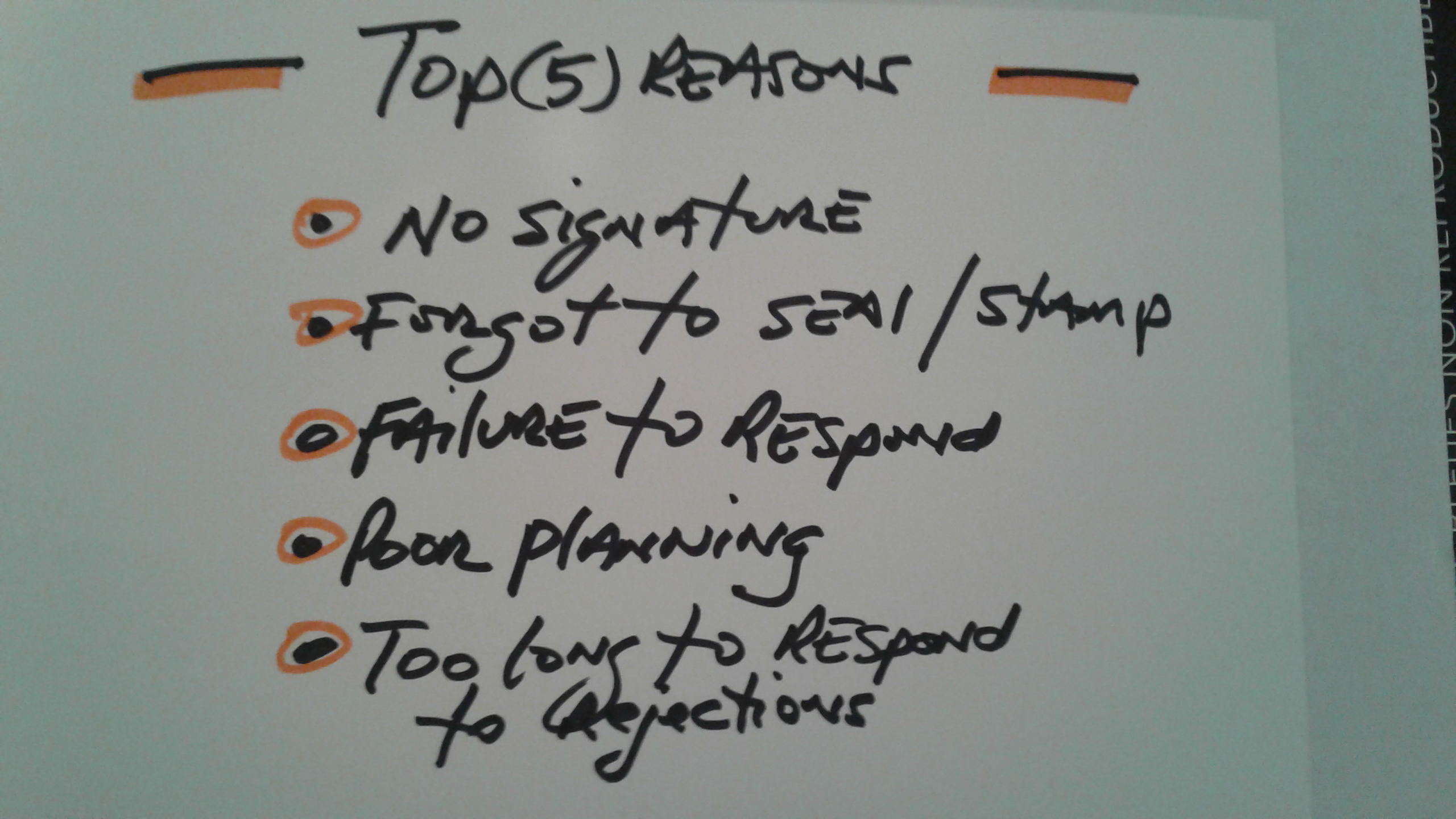
No signature on submitted plan set – Designing Architects and Engineers are busy and maybe working on multiple projects and while it is a simple mistake, many times the Professional forgets to sign the drawings. In turn, City Permitting does not accept the plan set until signed. Tip: Sign drawings
No professional stamp or seal not decipherable i.e. smeared – While the drawings may be signed, another reason for the possible delay is when the Professional’s seal or stamp on drawings is smeared, distorted and not readable. This is an avoidable mistake that can create a delay during submission or in the review process. Tip: Review plan set to confirm quality seal in place
Failure to Respond to Rejections – When areas on the drawings are incorrect or not understood or is a gray area in complying with building codes then the Plan Reviewer will create a rejection notice. Each rejection is to be responded to and corrected where needed and not doing so can cause immediate and sometimes substantially long delays. Tip: Respond to all rejections
Not Considering Building Permit during Design Phase – Last minute thinking about needing a building permit often causes errors on drawings and can result in key items on City Permitting checklist to be missed. This scenario can create a very stressful experience for all parties involved including City Plan Reviewers plus cause significant delays to submit and in reviewing plan set. Tip: Plan ahead.
Taking a Long Time to Respond to Rejections from City Permitting – Often times once the plans are submitted into building permitting the Architect or Engineer may have shifted to working on new projects. This can create an overburdened scenario resulting in the Architect or Engineer taking an inordinate amount of time to respond to City Permitting rejections and then resubmit plan set with corrections. Tip: Schedule to make corrections in a timely manner.
We realize it is important not only for our clients but for the industry as a whole to focus on what their organization does best, and we’re here to take away the hassles of obtaining building permits including avoiding simple mistakes that can cause unnecessary delays. Call us at 1.844.PERMIT-4 for assistance with your next building permit and other related services.
Len